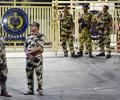
Security has been heightened outside the National Investigation Agency (NIA) headquarters in New Delhi, where Tahawwur Rana, the mastermind of the 2008 Mumbai terror attacks, is being held following his extradition from the United States. Rana was brought to India after the US Supreme Court dismissed his review plea against extradition. The NIA secured an 18-day custody of Rana after he was produced before a special court in Delhi. Additional police and paramilitary forces have been deployed to ensure law and order. The extradition of Rana, a close associate of David Coleman Headley, the main conspirator of the Mumbai attacks, is a significant development in the investigation into the 2008 attacks.

A Chicago court has given a 60-day deadline to the Federal Bureau of Investigation to complete its investigations and file an indictment into the foiled terror plot in India and Denmark by Pakistan-based Lashkar-e-Tayiba terrorist group.
Months before the Federal Bureau of Investigation finally arrested David Coleman Headley, his Moroccan wife Faiza Outalha had tried to warn the FBI about the Lashkar-e-Tayiba operative's terror links.
On the fourth anniversary of 26/11 Mumbai terror strike, US Under Secretary for Political Affairs Wendy Sherman says Lashkar-e-Tayiba operative David Coleman Headley's extradition to India is under consideration in an exclusive interview with CNN-IBN
Opposition parties, comprising of the Bharatiya Janata Party, the Left and the Samajwadi Party, sought a statement from the government on Thursday on the cooperation extended by the US in investigating the role of terror suspect David Coleman Headley in the 26/11 Mumbai attacks.
Pakistani-origin American David Coleman Headley, charged by FBI of being involved in the Mumbai terror attacks, was using US as a base to plan future attacks outside the country, a top Senator said on Thursday. "I understand he was able to use the US as a base of (terror) operations," Senator Joe Lieberman, Chairman of the Senate Homeland and Security and Governmental Affairs who has received a classified briefing on the issue, said at a Congressional hearing.
The induction of David Coleman Headley, the arrested American national and a Lashkar-e-Tayiba operative, in the 26/11 case has given a whole new dimension to its ongoing trial. Legal experts say that there will be no delay in the ongoing trial against lone surviving gunmen Ajmal Kasab, and other terror accused Sabahuddin and Fahim Ansari.
The US has said it is in communication with both India and Pakistan on the case of Lashkar-e-Tayiba operatives David Coleman Headley and Tahawwur Hussain Rana, who were arrested by the Federal Bureau of Investigation in October on charges of plotting terror attacks against Indian facilities.
A senior source in Mumbai police aggressively argued that revelations in the David Coleman Headley and Tahawwur Hussain Rana case by newly-formed National Investigation Agency and the Federal Bureau of Investigation of US is not going to affect the 26/11 case which is being heard in the special court set up at the Arthur Road jail in Mumbai.
Faiza Outlaha, the estranged wife of arrested Pakistani American Lashkar-e-Tayiba operative and 26/11 conspirator David Coleman Headley, is likely to be questioned by the National Investigating Agency; and for that a request has been sent out to Morocco, the country where she resides.
There appears to be a pattern in the manner that the accused in the 26/11 Mumbai terror attacks case are making statements before the court.
After the terror attacks in Mumbai last year, terror suspect Tahawwur Hussain Rana complimented members of the Lashkar-e-Tayiba, saying they had done a 'good job', United States prosecutors have alleged. According to a 10-page memo filed by United States prosecutors in a Chicago court on Monday, Rana asked co-conspirator David Coleman Headley to "pass along a message" to LeT Member A, whom Rana had given the name 'Khalid bin Waleed'.

A Delhi court has sought the trial records of the 26/11 terror attack from a Mumbai court ahead of the expected extradition of the crime's alleged mastermind Tahawwur Hussain Rana to India from the US. The US Supreme Court has cleared the way for Rana's extradition, dismissing his final legal challenge against the move.

The Canadian government is seeking to revoke the citizenship of Tahawwur Rana Hussain, a Pakistan-born businessman accused of involvement in the 2008 Mumbai terror attacks, due to misrepresentation on his citizenship application.

Pakistani-origin Canadian businessman Tahawwur Rana, a key accused in the 26/11 terror attacks case, stayed at a hotel in Mumbai's Powai area for two days in November 2008 ahead of the attacks, where he discussed about the crowded places in south Mumbai with a witness in the case, the police said on Tuesday.

Media reports had said that Headley was attacked by two inmates at a Chicago prison on July 8.

Here's what Headley told the court on Thursday:
Tahawwur Rana facilitated David Coleman's foreign visits and was aware of his links to the Lashkar-e-Tayiba, writes strategic expert B Raman.

Union Home minister Rajnath Singh asked Opposition parties if they were prepared to apologise to the nation for their "malicious campaign" against PM Modi over the killing of Ishrat Jehan.

Investigators suspect that similar terror plots were devised for multiple cities across India.To piece together the full scope of the conspiracy, officials may take Rana to various locations, retracing events from 17 years ago.

Uncover the real life figures that inspired the characters in Dhurandhar The Revenge, from Pakistani politicians and notorious gangsters to infamous terrorists.
Tahawwur Hussain Rana, a Canadian national convicted in the United States for his role in the 2008 Mumbai terror attacks, has been extradited to India. Rana, a close associate of Pakistani-American terrorist David Coleman Headley, was involved in the conspiracy from 2005 onwards and assisted Headley in obtaining a visa for India. He is the third person to be sent on trial in India for the 26/11 attacks after Ajmal Kasab and Zabiuddin Ansari alias Abu Jundal. Rana's extradition comes after US President Donald Trump approved the request.
Even after Lashkar-e-Tayiba's David Coleman Headley identified his Inter-Services Intelligence handler Major Iqbal as Chaudhery Khan, mystery continues to shroud his presence. Hoping to get another access to Headley, the National Investigation Agency on the 26/11 money trail, is positive of hunting down the major. Vicky Nanjappa reports.

The Congress party has claimed credit for the extradition of Tahawwur Rana, an accused in the 2008 Mumbai terror attacks, from the US, saying the Modi government did not initiate the process and merely benefited from the "mature, consistent and strategic diplomacy" begun under the UPA. Former Home Minister P Chidambaram said the government did not secure any breakthrough to make the extradition possible, nor is it the result of any grandstanding. He added that it was a testament to what the Indian state can achieve when diplomacy, law enforcement and international cooperation are pursued sincerely and without any kind of chest-thumping. Chidambaram detailed the UPA government's efforts in securing Rana's extradition, citing the registration of a case against him in 2009, diplomatic pressure on Canada and the US, and continued efforts despite legal setbacks. He highlighted the role of the UPA in securing Rana's conviction for other terrorism-related offences and the cooperation between the US and Indian agencies in gathering evidence and securing his extradition. The Congress leader further stated that it was the UPA's groundwork that paved the way for Rana's extradition, even after the change in government in 2014.

'He is the key to unravel the 26/11 conspiracy.'
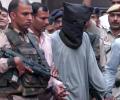
The National Investigation Agency has informed a Delhi court that Mumbai attack accused Tahawwur Rana could spill the beans on the ongoing and future terror plans of outfit Lashkar-e-Taiba and its chief Hafiz Saeed for India.
Evidently on the strength of continuing information provided by Lashkar-e-Tayiba operative and Pakistani American David Coleman Headley alias Daood Gilani, who was an integral protagonist in the conspiracy that led to the horrific 26/11 Mumbai terror attacks, four new Lashkar handlers of Headley have been chargesheeted in the US District Court for the Northern District of Illinois (Chicago).
International pressure in the aftermath of the Mumbai attacks led Lashkar-e-Tayiba to abandon its plan to attack a Danish newspaper in retaliation to the publication of a cartoon of Prophet Mohammed, David Coleman Headley told a court on Wednesday.

A Delhi court on Monday extended by 12 more days the NIA custody of 26/11 Mumbai attack accused Tahawwur Hussain Rana.
While the Lashkar-e-Tayiba leadership made plans for fool-proof attacks in Mumbai, the ten men involved in the carnage made a number of mistakes thus leaving crucial clues behind for Indian intelligence agencies, according to court documents.
A mysterious 'Rahul' appears to have been the prime target of Chicago resident David Coleman Headley, nabbed by the Federal Bureau of Investigation for planning to carry out a major terror attack in India this month at the behest of Pakistan-based Laskar-e-Tayiba.
A team of Indian investigators will travel to the United States next week to question David Coleman Headley, arrested by the Federal Bureau of Investigation for plotting terror-attacks overseas, including India.
The verdict in the trial of Tahawwur Hussain Rana, co-accused in the Mumbai terror attacks with David Coleman Headley, is likely to come in earlier than expected as the Chicago businessman is unlikely to testify at his own trial. Rana's attorney Patrick Blegen said his client's defence team was still making a final decision, but that it was unlikely Rana would take the stand.
The trial of Pakistani-Canadian Tahawwur Hussain Rana who is accused with David Coleman Headley for the 2008 Mumbai terror attacks began in Chicago on Tuesday.
Pakistani-American Lashkar-e-Tayiba operative David Coleman Headley's remarks before a Mumbai court that Ishrat Jahan was actually a Lashkar operative could come in handy for former Gujarat top cop D G Vanzara who has been saying all along that the encounter wasn't staged as has been alleged.
With just days to go before United States President Barack Obama arrives in India, a major controversy has erupted over American terror suspect David Coleman Headley, who had allegedly surveyed locations in Mumbai that were targeted by the 10 Lashkar-e-Tayiba terrorists on November 26, 2008.
"The informal directive came after Pakistani American Lashkar terrorist David Coleman Headley's confession that he recced several targets including Sena Bhavan," a party source said
Last May, US citizen David Headley confessed to being a spy for the Lashkar-e-Taiba. What no one has tackled yet is whether there are other Headleys out there whose actions threaten India, or any other country. Even with thousands of intelligence agencies scouting for terrorist activities, are we really safer?
Canadian-Pakistani Tahawwur Hussain Rana, indicted on charges of helping plan the 26/11 Mumbai attacks, is expected to be arraigned in a court here on January 21 along with co-accused David Coleman Headley.
An attack on India's National Defence College was discussed by suspected LeT operatives David Coleman Headley and Tahawwur Hussain Rana, who offered praise for the terror outfit LeT and said he "appreciates them from heart", US prosecutors alleged on Monday.
